
Oak is one of the most frequently chosen species for natural veneer production. It combines a durable, versatile grain pattern with a wide range of shades – from light, beige-gold tones, through classic golden-brown flares, to dark, smoked hues. This makes oak veneers suitable for both modern, minimalist interiors and designs with a rustic or industrial character.
Veneer is a thin layer of natural wood applied to furniture boards—MDF, plywood, or particleboard. This technology allows for the appearance of solid wood while providing greater material stability and more efficient use of the raw material.
Smoked oak veneer striped

Smoked oak veneer flader

Knotty oak veneer

Striped oak veneer

Cat's paw oak veneer

Flader oak veneer

Red oak veneer

Striped white oak veneer

Beam oak veneer
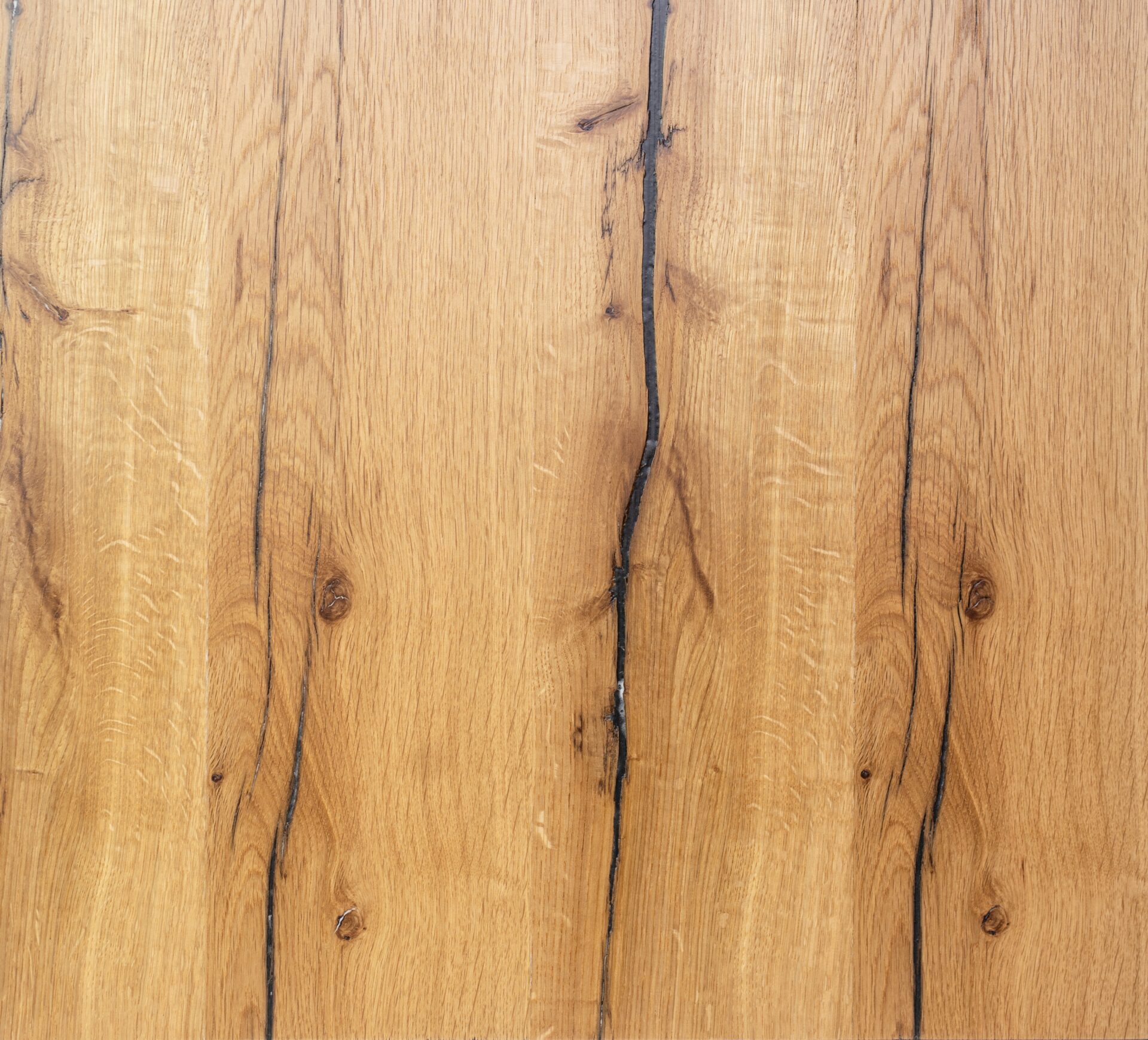
What types of oak veneer are available?
The offer includes various methods of cutting and selecting oak wood, thanks to which each variant has a different character of the pattern and color:
- European oak flader – golden-brown color, wide, cathedral-shaped grain. One of the most versatile variants.
- European striped oak – simple, linear grain pattern and calm golden-brown tones. A good choice for classic and minimalist designs.
- American white oak striped – light, beige and gold colors and a structured, striped pattern. Works well in modern, uncluttered interiors.
- American red oak – a warmer, slightly pinkish tone and a distinct, decorative grain.
- Smoked oak flader – deep, smoky browns combined with a broad, textured pattern. A darker, more elegant version of oak.
- Smoked oak stripes – smoky colors and a simple, linear grain pattern – dark wood in a modern rhythm.
- Random Gnarled Oak – irregular pattern with visible knots and changes in fiber direction, arranged randomly.
- Beamed oak – rustic character of old wood, discolorations and knots inspired by structural beams.
- Pipi's Cat Paw Oak – tiny, irregular holes on an oak background, known as the pippy oak effect. A highly decorative, unique pattern.
How to Choose Oak Veneer for Your Project
The choice of a specific variant depends primarily on the nature of the interior and the effect that the surface is to produce:
- Variants with an orderly, linear pattern work well for bright and minimalist interiors – American white oak striped or European oak striped.
- A wide, decorative flader pattern – European flader oak or its darker version, smoked flader oak – suits classic and elegant designs.
- For loft and industrial interiors, rustic variants with irregular patterns are recommended – beamed oak or random knotty oak.
- For projects looking for a strong decorative accent, Pipi cat's paw oak is a good choice, its small holes give the surface a very individual character.
- American red oak suits warm interiors with a clear pattern.
The color and pattern of the veneer may vary depending on the material batch, cutting method and the type of finish used – varnish, oil or stain.
Application of oak veneer
Oak veneers are used in furniture, joinery and interior design:
Furniture and joinery – furniture fronts, countertops, bodies and built-ins – interior doors – wall panels – office, hotel and individual furniture
Interior design projects – kitchens, dressing rooms and reception areas – offices and commercial spaces – apartments and hotel interiors – accent and decorative walls
Veneers can be used on MDF, plywood and chipboard, and the finished surfaces look good in matte, semi-matte and gloss finishes.
FAQ
What are the differences between different oak veneers?
The differences primarily concern the method of cutting and selecting the wood – hence variants such as flader (a wide, cathedral-shaped pattern), striped (a simple, linear arrangement), or random (irregular, free-form joining of sheets). This also influences the final color scheme and character of the surface.
Which oak veneer should you choose for a modern kitchen?
Striped variants – American striped white oak or European striped oak – work well for modern, tidy interiors thanks to their calm, linear pattern.
Are oak veneers a completely natural material?
Yes. Each veneer is a thin layer of natural oak wood, intended for veneering furniture boards and joinery elements.
What boards can oak veneer be used on?
Oak veneer can be used on MDF, plywood and chipboard, as well as on finished veneered boards.
Technical advice – the CDO Wood and Veneer Center team helps in selecting the right oak veneer variant for a specific project.